

On 26–27 May 2026 in Hanoi, the “Training Programme on Improving Operations and Implementing Energy Efficiency for Small and Medium-sized Enterprises (SMEs)” was held, attracting nearly 50 participants, including business owners, managers, and technical staff from various provinces, cities, and key industrial sectors.
The training was organized under the project “Accelerating energy efficiency in large industries through energy management systems, system optimisation and the promotion and adoption of energy efficiency in small and medium-sized enterprises (IEEP).” The project is funded by the European Union, managed by the Ministry of Industry and Trade (MOIT), and implemented by the United Nations Industrial Development Organization (UNIDO). It aims to strengthen efficient energy use and enhance the competitiveness of Vietnamese enterprises in the context of green transition.
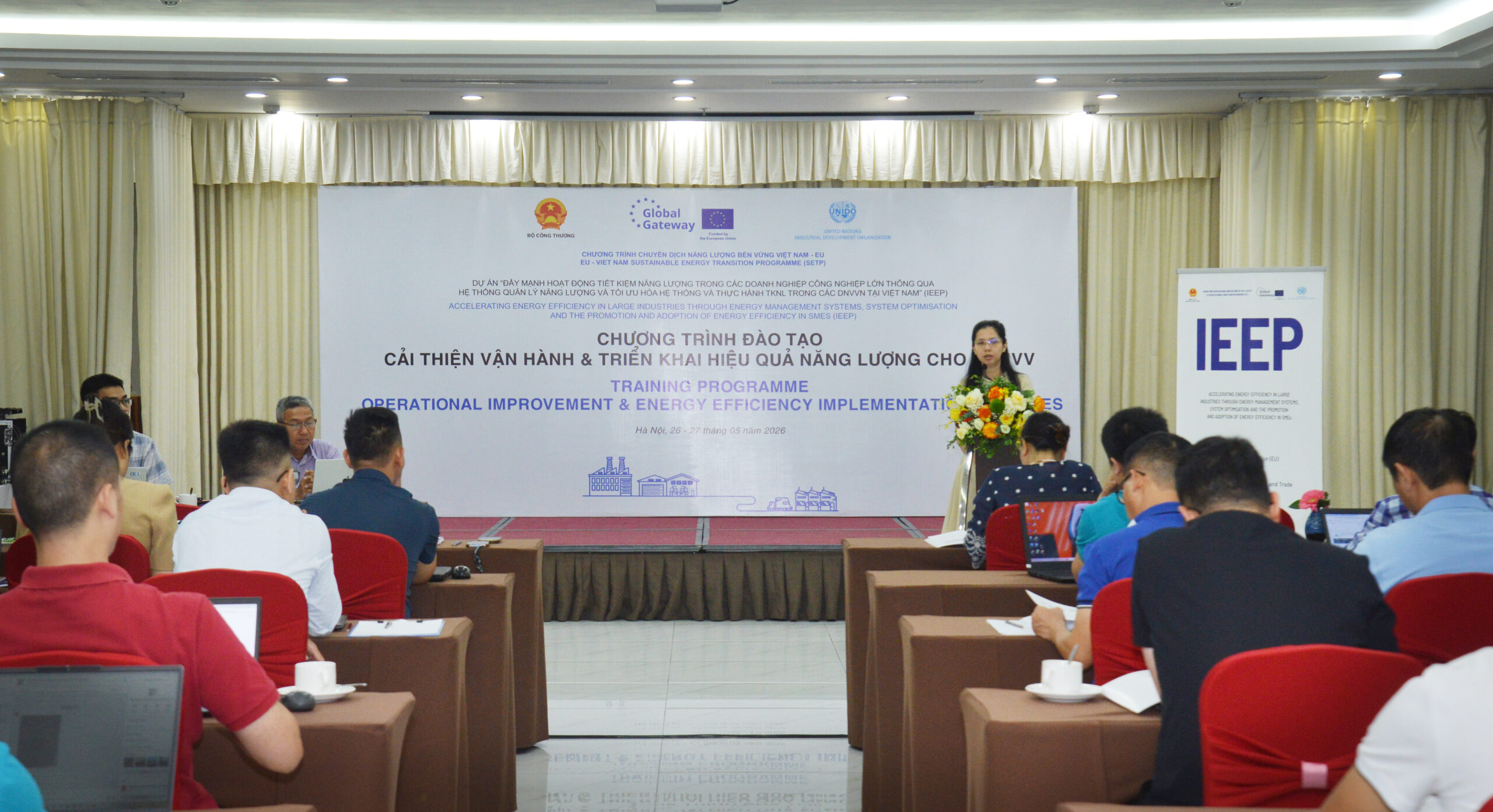 Ms. Nguyen Thi Ngoc Lan, IEEP Project Manager, delivered opening remarks at the training.
In her opening remarks, Ms. Nguyen Thi Ngoc Lan emphasized the urgent context in which energy security and emissions reduction requirements are placing increasing pressure on businesses. She noted: “If energy is not used efficiently and consistently, it may lead to local energy shortages, higher production costs, and a decline in the competitiveness of Vietnamese goods in international markets.” She also highlighted that major export markets such as the EU, the United States, and Japan are increasingly tightening green standards, requiring businesses, especially SMEs, to adapt quickly if they do not want to be excluded from global supply chains.
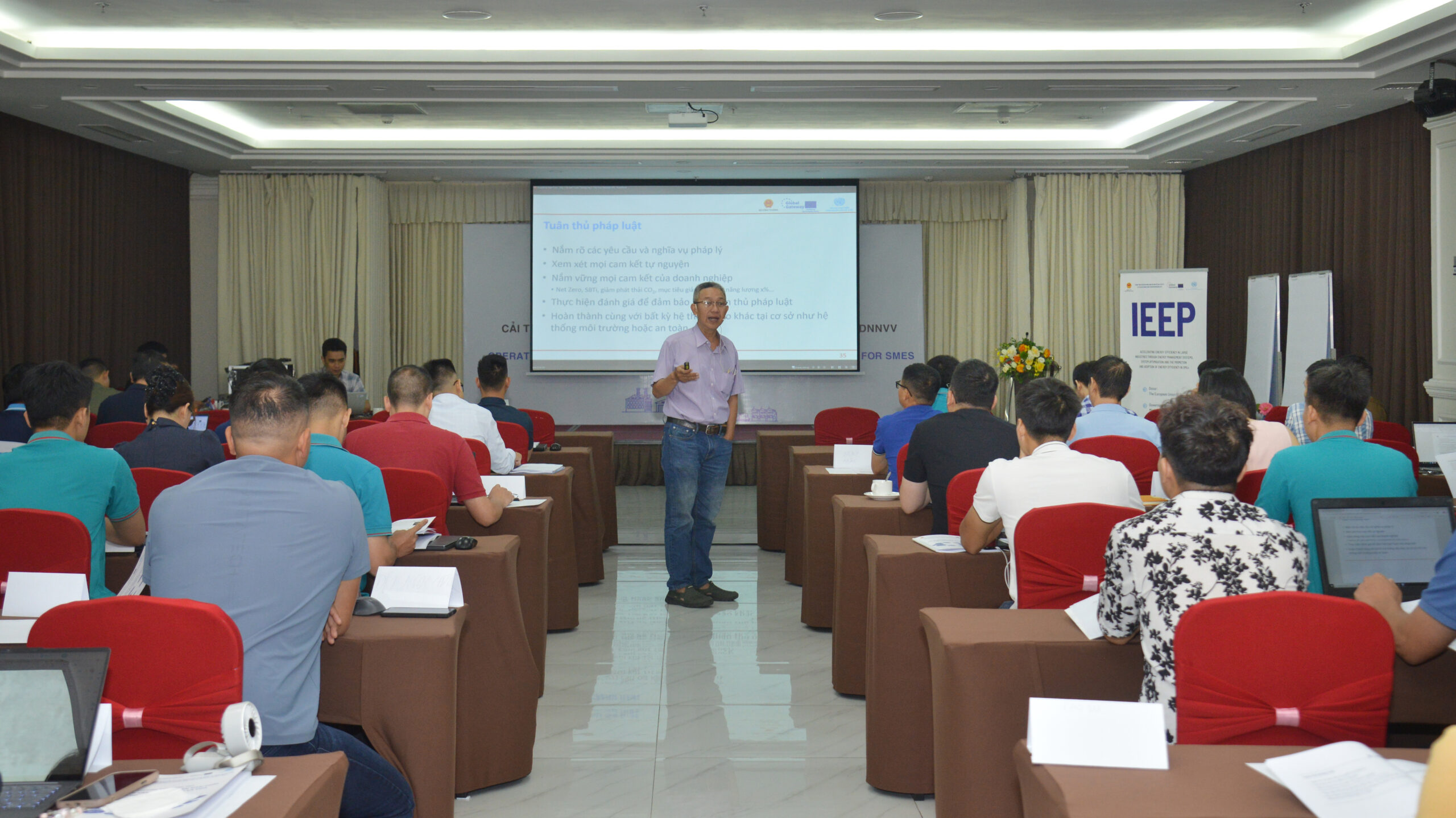 Trainers shared practical solutions to optimize energy use in enterprises.
The training programme was designed with a practical focus, combining theory with typical examples of energy use in SMEs to help participants better understand and immediately apply solutions to improve energy efficiency in production. The content focused on identifying energy-saving opportunities, optimizing system operations, applying energy management tools, and gradually implementing technical solutions suited to the scale of small and medium-sized enterprises. In addition, participants were guided on how to access existing support mechanisms, such as energy audits, technical advisory services, and preferential green finance sources for investment in high-efficiency equipment.
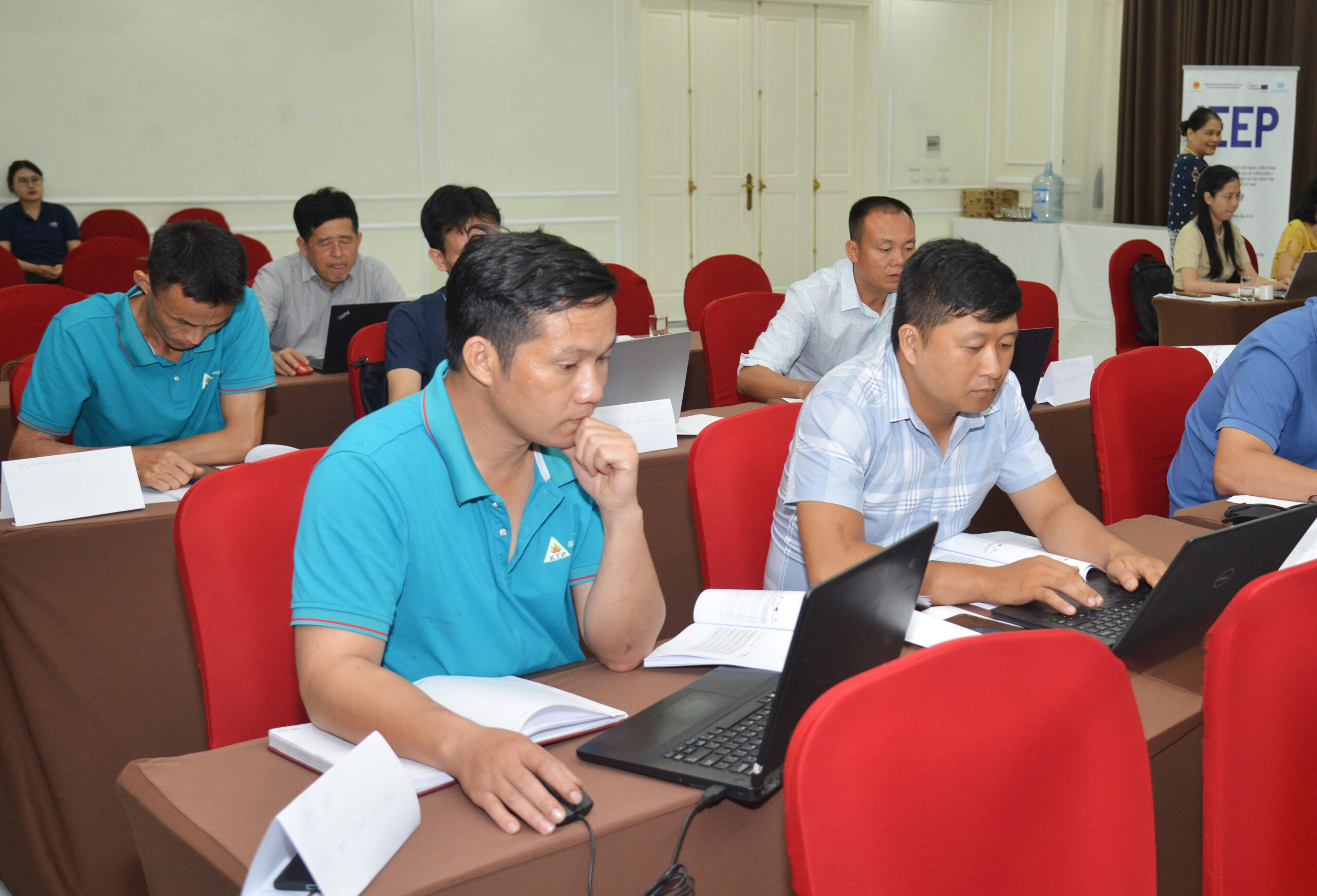 Participants from SMEs across different sectors listened to and learned from practical experiences in efficient energy use.
The training brought together SMEs operating in a wide range of sectors, including rubber, textiles and garments, seafood processing, beverages, paper and pulp, chemicals and fertilizers, metals and steel, and cement. Participating enterprises came from Hanoi and several neighboring provinces and cities, including Hung Yen, Bac Ninh, Hai Phong, Quang Ninh, Phu Tho, Ninh Binh, Thai Nguyen, Thanh Hoa, Ha Tinh, Lao Cai, and Tuyen Quang. This created a diverse forum for exchanging practical experiences in production and energy use.
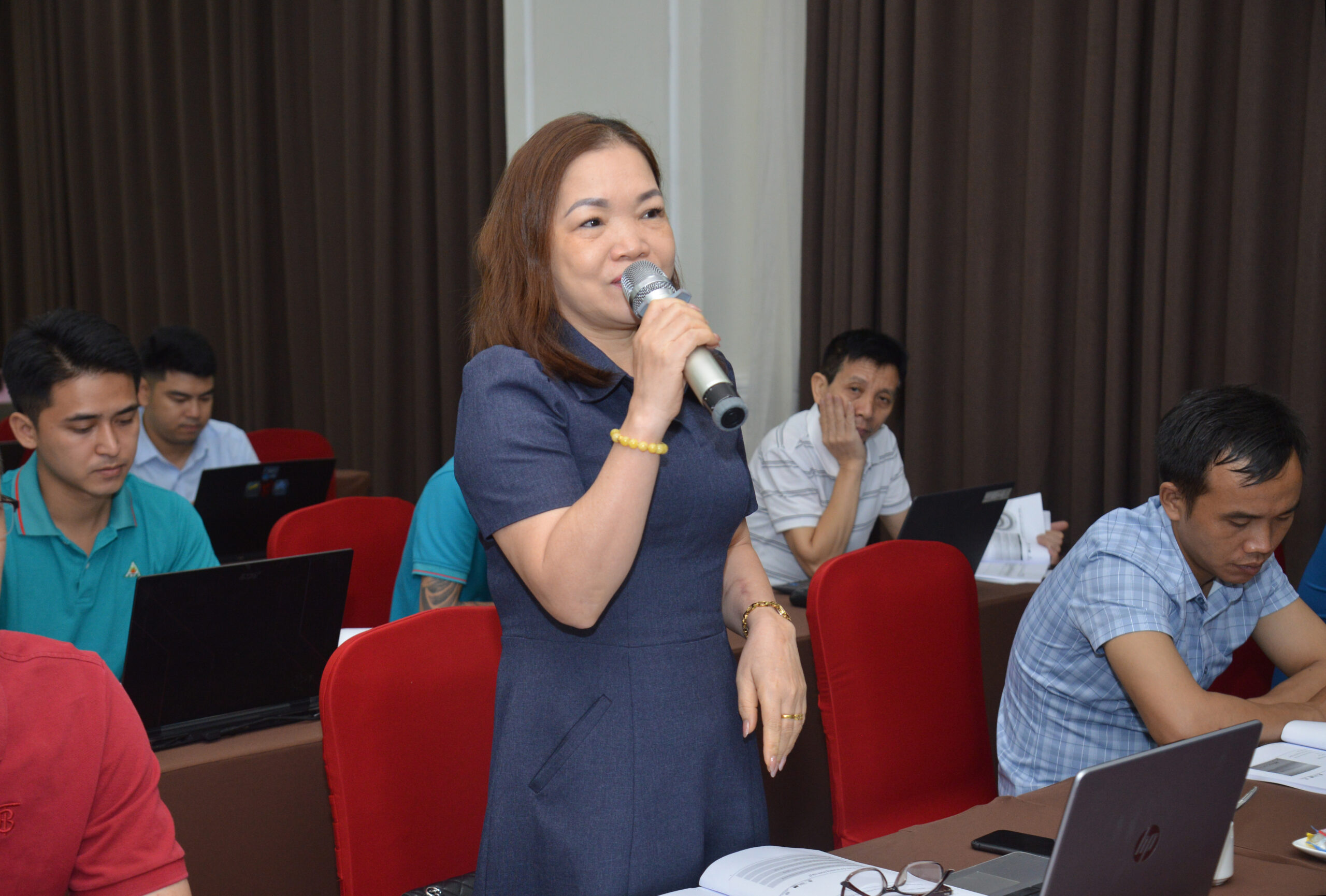 Participants actively exchanged ideas and shared practical experiences from their production and energy use processes.
Through the training, enterprises were not only equipped with the knowledge and tools needed to improve energy efficiency, but also had the opportunity to connect, share experiences, and gradually develop green transition roadmaps suited to their own circumstances. The training is considered a practical activity that contributes to supporting the SME community in enhancing competitiveness and adapting to increasingly stringent requirements in both domestic and international markets.
Source: tietkiemnangluong.com.vn
Views: 198
