

Ho Chi Minh City, 24–25 August 2026 – The EU–Viet Nam Sustainable Energy Transition (EVSET) Facility, in collaboration with the Center for Energy Information and Electricity Market Development (EAVCED) under the Electricity Authority of Viet Nam (EAV), Ministry of Industry and Trade, organised a two-day training programme to strengthen the collection, validation and reporting of data to the Viet Nam Energy Information System (VEIS).
The programme brought together 37 participants from southern provinces and cities, representing key institutions and enterprises across Viet Nam’s energy sector, including Departments of Industry and Trade, electricity generators and independent power producers, power system and electricity market operators, transmission and distribution utilities, and state-owned energy corporations. The training was opened by Ms Nguyen Thi Phuong Yen, Deputy Director of EAVCED, and Ms Tran Thuy Duong, Programme Manager – Sustainable Energy at the Delegation of the European Union to Viet Nam, both of whom underlined the importance of strengthening energy data reporting for Viet Nam’s energy transition.
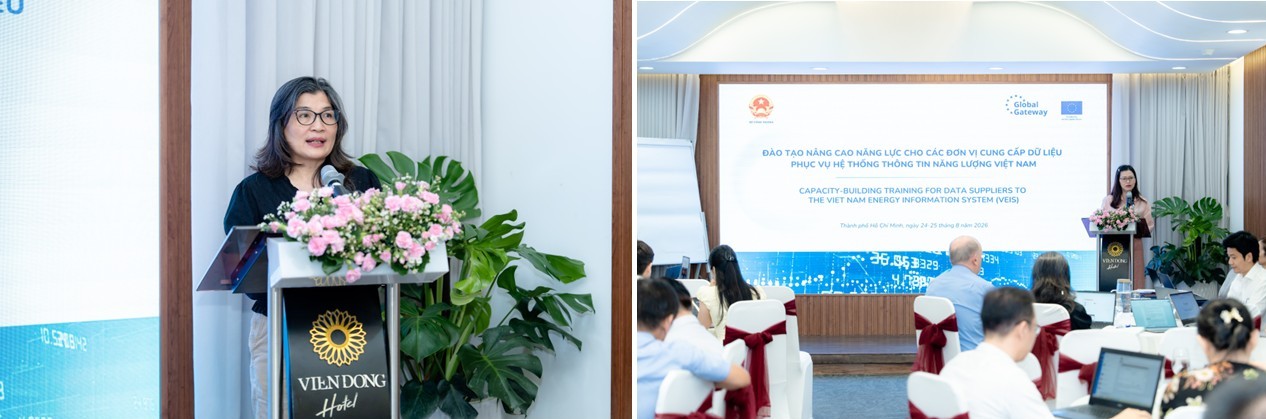 Ms Tran Thuy Duong (Left) and Ms Nguyen Thi Phuong Yen deliver opening remarks at the training.
The training forms part of the European Union’s support to Viet Nam through the EVSET Facility under the EU–Viet Nam Sustainable Energy Transition Programme (SETP), which accompanies Viet Nam’s transition towards a cleaner, more sustainable and resilient energy system. Strengthening the performance of VEIS is one of the key areas of support under the Programme.
The European Union has supported the development of VEIS through several stages, from earlier technical assistance for its roadmap, action plan and institutional foundations to more recent assistance in strengthening the regulatory framework and improving the quality of energy data. This continued engagement highlights the important role of reliable information in Viet Nam’s energy transition. As Vietnam is accelerating its energy transition, safeguarding national energy security, and developing a competitive electricity market, establishing an integrated, modern, data-driven energy information system has become an urgent priority.
During the two-day programme, participants strengthened their understanding of data-reporting requirements under Circular No. 34/2019/TT-BCT and Circular No. 42/2024/TT-BCT, while gaining hands-on experience with data collection and reporting templates for the power system and electricity market.
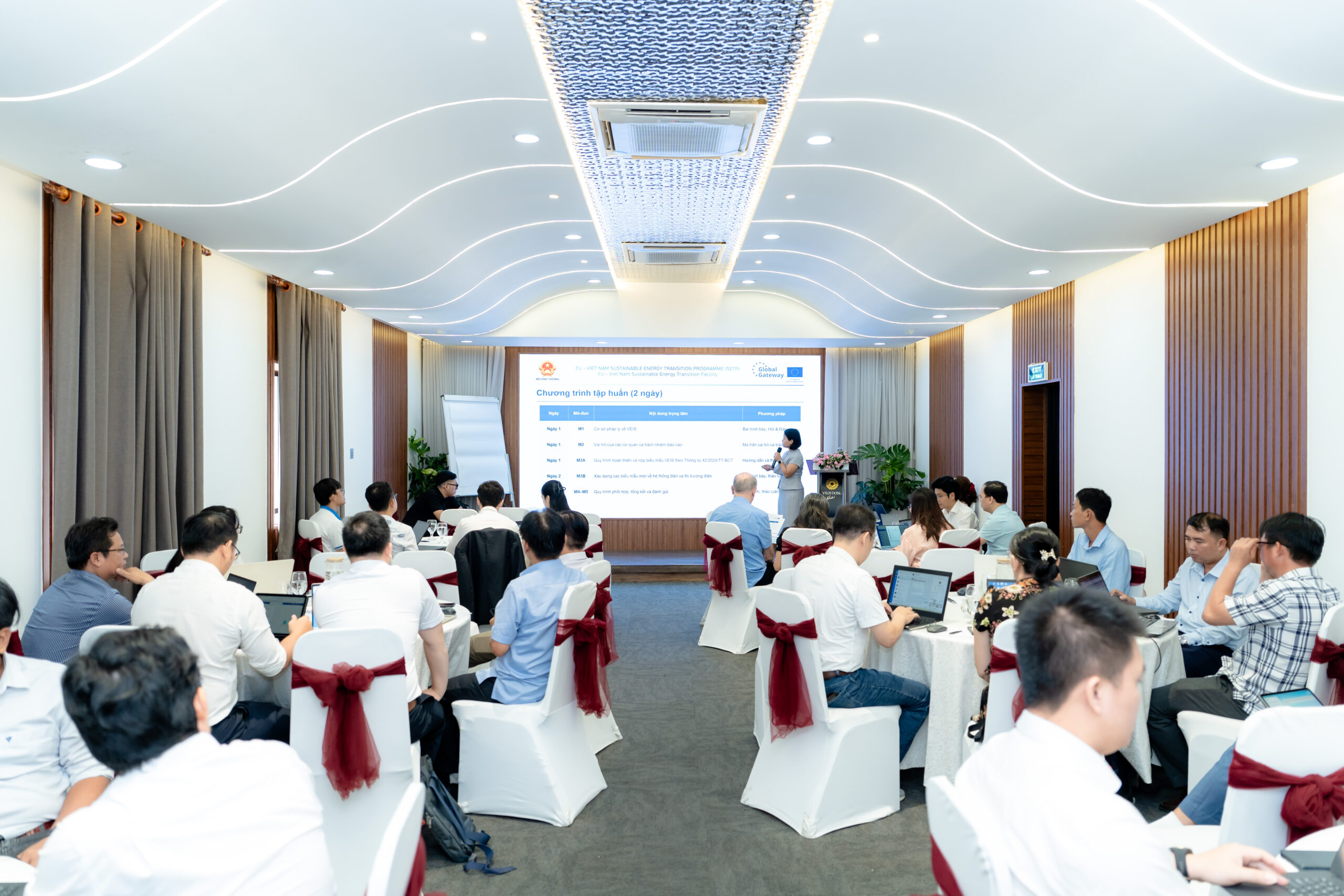
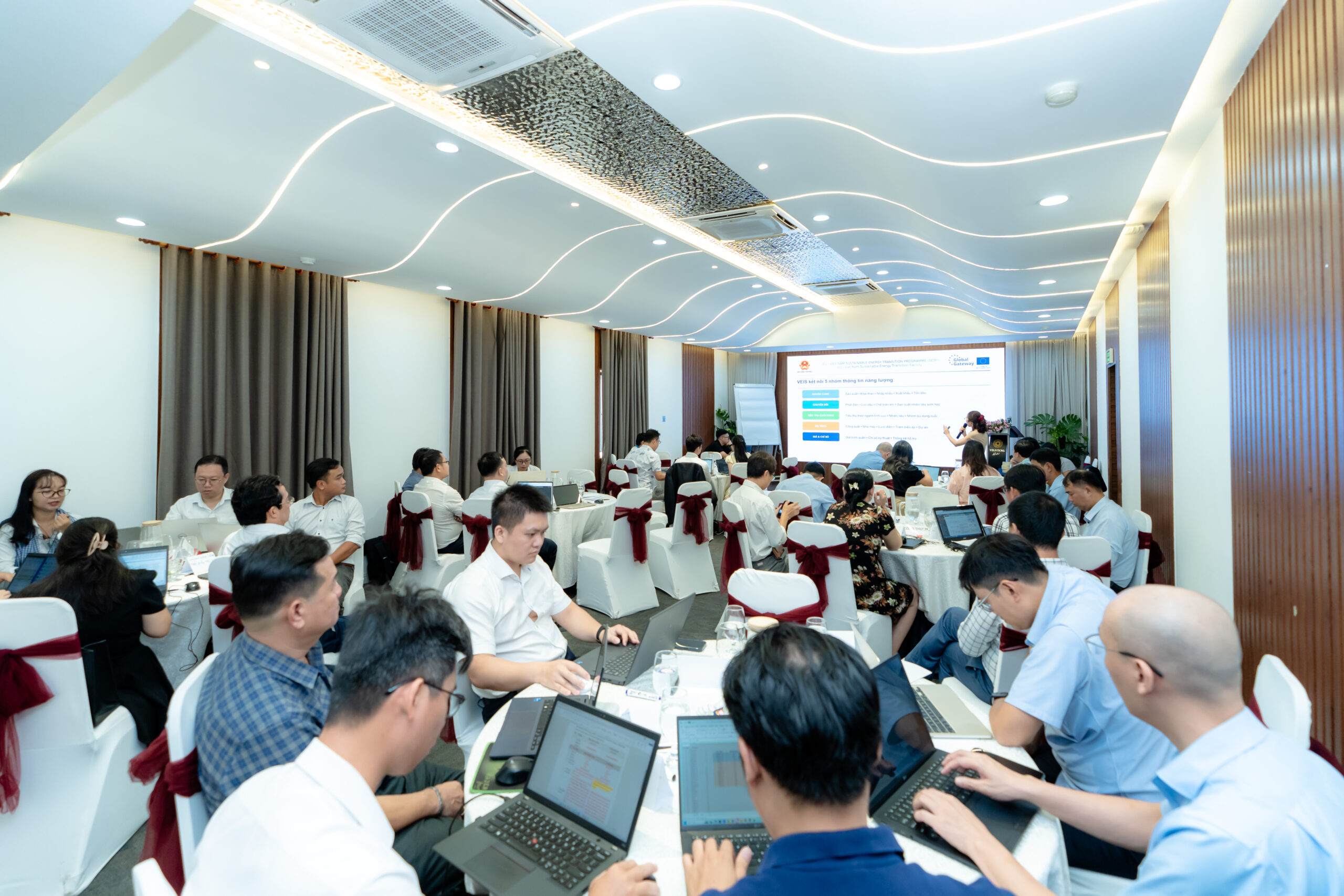
Experts from the EVSET Facility co-delivered the programme with technical officials from EAVCED, covering the legal and institutional framework underpinning VEIS and clarifying key reporting requirements, including reporting scope, reporting entities, frequency and templates. Participants then took part in hands-on exercises on completing and submitting VEIS reporting templates, checking data for completeness, validity and consistency, verifying information before submission, and identifying and addressing common errors in data compilation, entry and transmission.
Through the exercises, group discussions and question-and-answer sessions, participants shared practical challenges encountered in fulfilling their reporting responsibilities and explored ways to address them. The sessions also helped clarify the respective roles of different groups of data suppliers and provided an opportunity to discuss data flows, verification and feedback procedures, coordination mechanisms, and response timelines between data providers at central and local levels.

The Ho Chi Minh City programme is the first of three training sessions to be organised for data suppliers across the southern, central and northern regions of Viet Nam. Developed in close collaboration with EAVCED, the training series addresses immediate needs to improve the quality and consistency of data reported to VEIS, while also strengthening EAVCED’s capacity to deliver similar training independently in the future.
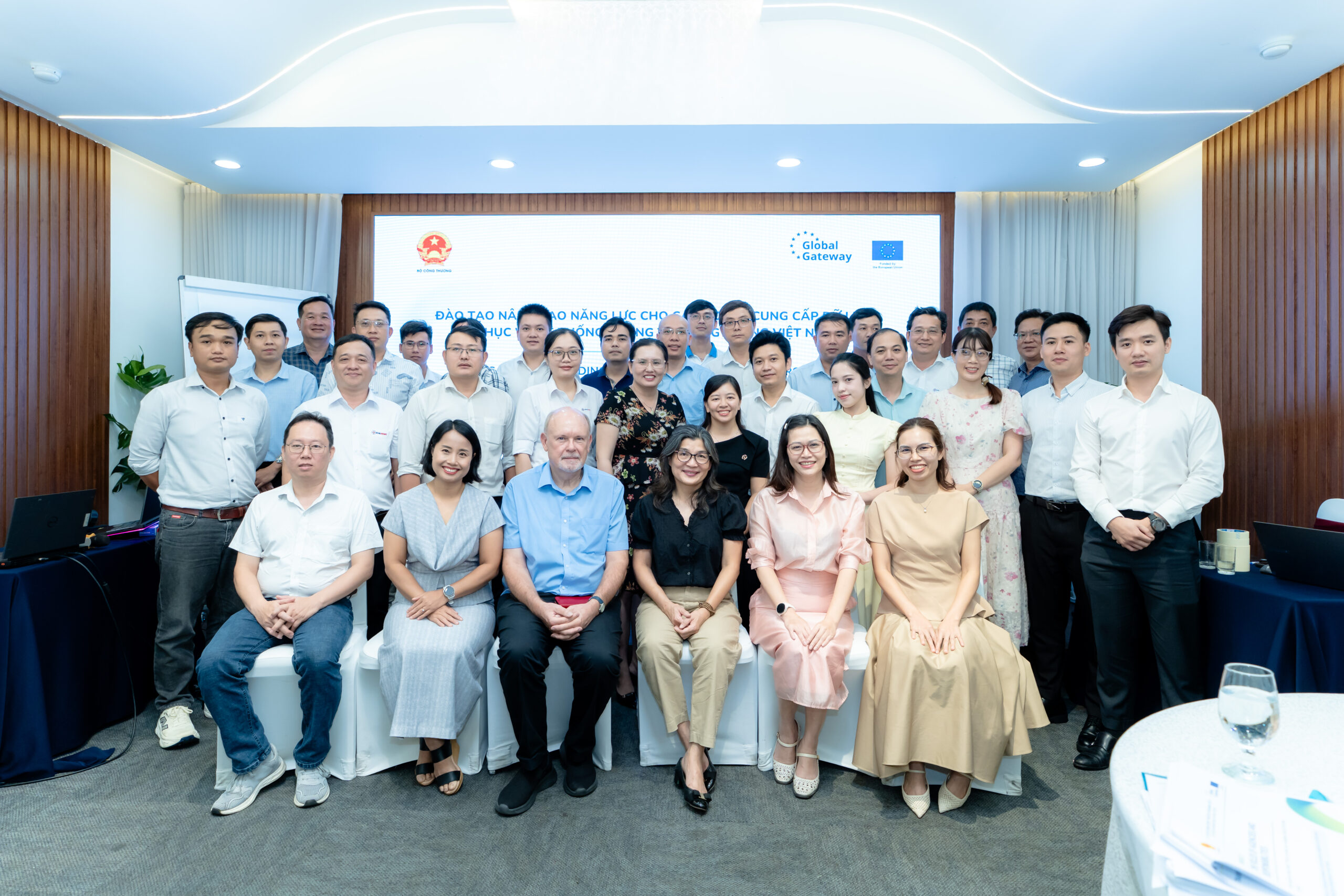
By equipping data suppliers with a clearer understanding of reporting requirements and practical tools for data preparation and verification, the programme contributes to improving the quality of input data for VEIS, gradually strengthening the national energy database, supporting the energy transition, promoting the development of a transparent electricity market, and safeguarding national energy security.
Views: 124
